
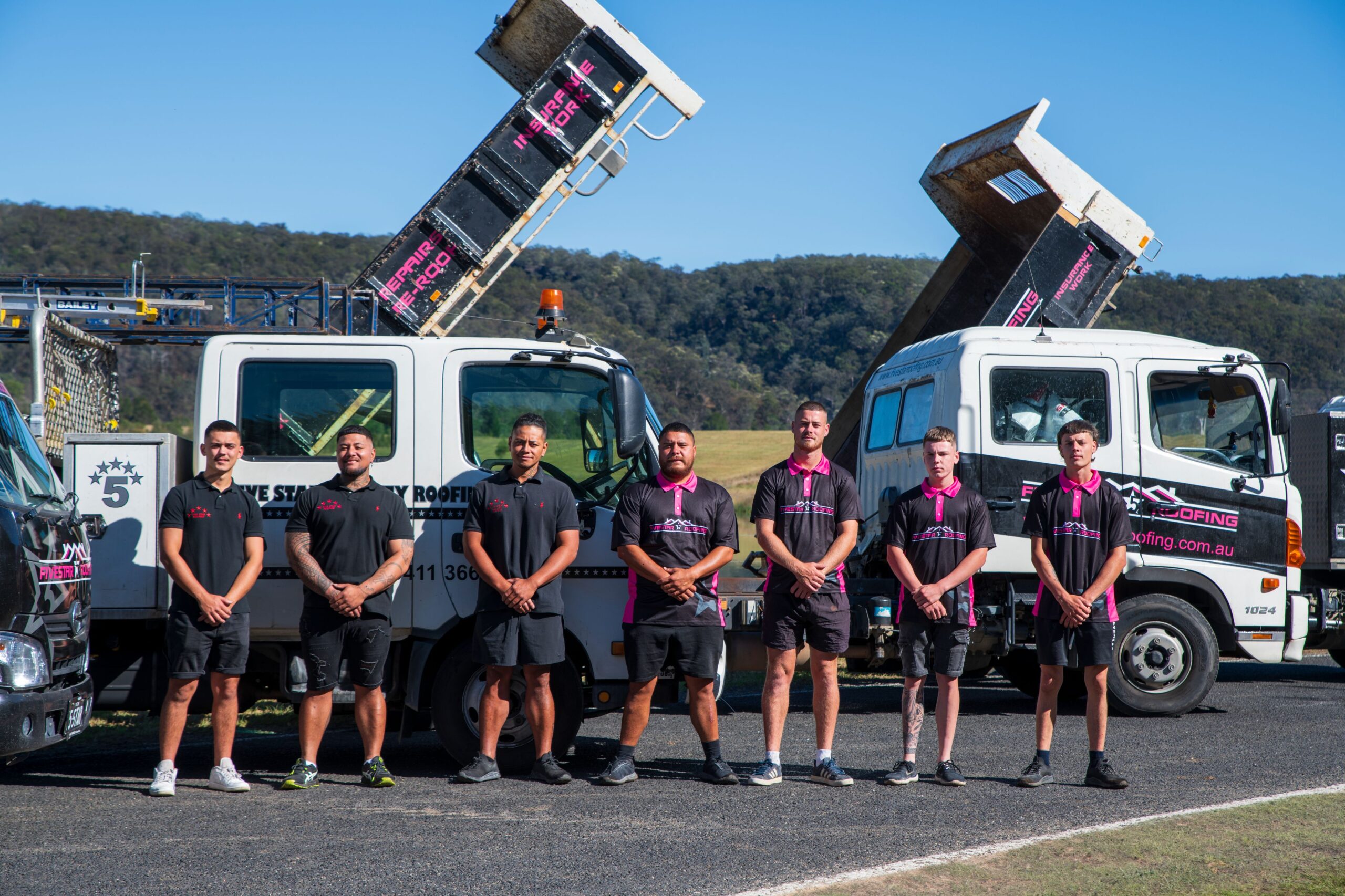
Written by Five Star Roofing | Published on July 2025
Knowing how to choose a roofer in Australia can save you thousands of dollars and months of headaches. Look for a licensed, insured contractor with verifiable local references, a written quote, and clear communication before you sign anything.
This guide covers the key questions to ask, the red flags to watch for, and what separates a trustworthy roofer from a risky one. Whether you are in Sydney, Brisbane, or Canberra, the same core principles apply across NSW, QLD, and ACT.
Verify Licenses and Insurance Before Anything Else
In Australia, roofing work is a licensed trade in every state and territory. Hiring an unlicensed contractor is not just risky, it can void your home insurance and leave you personally liable for any injuries on site.
Here is what to check before you agree to any work:
- NSW: Roofers must hold a contractor license issued by NSW Fair Trading. You can verify this on the NSW Fair Trading licence checker online.
- QLD: A QBCC (Queensland Building and Construction Commission) licence is mandatory for roofing work over $3,300.
- ACT: Roofers need a licence from Access Canberra. You can search the ACT Licensed Trades register to confirm their details.
- Public liability insurance: A minimum of $5 million cover is standard. Ask for a current certificate of currency, not just their word.
- Workers compensation insurance: This protects you if a worker is injured on your property during the job.
At Five Star Roofing, we are fully licensed across NSW, QLD, and ACT, and we provide all insurance documentation upfront without you needing to ask twice.
Ask These Specific Questions Before Signing a Quote
The questions you ask a roofer before hiring them reveal more than any brochure or website ever will. A confident, reputable contractor will answer these clearly and without hesitation.
Use this list as your checklist when speaking with any roofer:
- How long have you been operating in this area? Local experience matters. A roofer familiar with your suburb understands local council requirements and weather patterns.
- Can you provide references from recent local jobs? Ask for at least two or three references from the past 12 months in your area.
- Who will actually do the work? Find out if they use subcontractors or their own crew. This affects accountability.
- What does your warranty cover? Labour warranties and manufacturer product warranties are different. Get both in writing.
- What is your timeline and how do you handle delays? Weather delays are common in QLD during storm season. Understand their process upfront.
- Do you handle council approvals or development applications if required? Certain roof replacements or structural changes in ACT and NSW may need council sign-off.
- How do you protect my property during the job? Gutters, gardens, and interior ceilings can all be damaged. Ask what precautions they take.
A roofer who gets defensive or vague about any of these is a warning sign worth taking seriously.
Compare Quotes the Right Way
Getting multiple quotes is smart. But comparing quotes correctly is what separates a good decision from a costly mistake. The cheapest quote is almost never the best value.
| Quote Element | What to Look For | Red Flag |
|---|---|---|
| Itemised breakdown | Labour, materials, and disposal listed separately | One lump sum with no detail |
| Material specifications | Brand names, product codes, and grades listed | Generic terms like “tiles” or “metal” |
| Timeline | Start date and estimated completion | No dates or vague “a few weeks” answers |
| Payment schedule | Staged payments tied to milestones | Large upfront deposit of 50% or more |
| Warranty terms | Written, with specific duration and exclusions | Verbal only or no mention of warranty |
| Licence number | Displayed on the quote document | Absent or hard to find |
Aim to get at least three quotes for any roofing job over $5,000. This gives you a realistic sense of the market rate in your area and helps you spot pricing that is either suspiciously low or inflated.
Understand Regional Pricing Across NSW, QLD, and ACT
Roofing costs in Australia vary depending on your location, roof type, and the materials used. Climate also plays a role. Coastal NSW properties may need corrosion-resistant materials, while QLD homes need roofing rated for cyclonic wind loads in certain zones.
| Region | Roof Replacement (avg per m2) | Roof Repair (avg) | Key Local Consideration |
|---|---|---|---|
| Sydney, NSW | $60 – $120 per m2 | $300 – $1,500 | Saltwater exposure near the coast |
| Regional NSW | $50 – $100 per m2 | $250 – $1,200 | Bushfire zones may require BAL-rated materials |
| Brisbane, QLD | $55 – $110 per m2 | $300 – $1,400 | Storm season damage is common from November to April |
| North QLD | $70 – $130 per m2 | $350 – $1,800 | Cyclone wind ratings are mandatory in many areas |
| Canberra, ACT | $60 – $115 per m2 | $300 – $1,500 | Frost and hail damage are seasonal concerns |
These are general ranges based on current market conditions. Your actual cost will depend on your roof size, pitch, access difficulty, and the materials you choose. Always get a site-specific quote.
Spot the Red Flags That Signal an Unreliable Roofer
Storm chasers and fly-by-night operators are a real problem across Australia, especially after major hail events in Sydney, Brisbane, and Canberra. Knowing the warning signs protects you and your home.
Watch out for these red flags:
- Door-knocking immediately after a storm: Opportunistic contractors often approach homes right after severe weather with urgent, high-pressure sales tactics.
- No local address or office: If a roofer cannot point you to a physical location in your region, they may disappear once the job is paid for.
- Cash-only payment requests: Legitimate businesses accept bank transfer and provide a tax invoice. Cash-only requests avoid paper trails.
- No written contract: In NSW and QLD, a written contract is legally required for residential building work over certain thresholds. Not providing one is a legal breach.
- Pressure to decide immediately: Reputable roofers do not pressure you. They give you time to compare and decide.
- No online presence or reviews: Check Google reviews, local Facebook groups, and platforms like hipages or ServiceSeeking to verify reputation.
If something feels off, trust your instincts. Five Star Roofing encourages every customer to take their time, check credentials, and ask as many questions as they need before committing.
Check Their Experience With Your Specific Roof Type
Not every roofer is experienced with every roof type. A contractor who specialises in Colorbond metal roofing may not have the same skill set for terracotta tile repairs or flat membrane roofing systems.
Common roof types across NSW, QLD, and ACT include:
- Colorbond steel: Widely used across all three regions for its durability and low maintenance. Popular in new builds and replacements.
- Concrete tiles: Common in suburban Sydney and Brisbane. Heavy and long-lasting but require structural support checks.
- Terracotta tiles: Found on older homes in inner Sydney and parts of QLD. Require careful handling and matching replacements.
- Flat or low-pitch membranes: Used on commercial buildings and modern homes. Requires specialist waterproofing knowledge.
- Zincalume: A zinc and aluminium alloy sheeting option with high corrosion resistance. Good for coastal NSW properties.
Ask your roofer how many jobs they have completed using your specific roofing material. Request photos of similar completed projects and confirm they have access to the correct replacement materials if repairs are needed.
FAQs on How to Choose a Roofer in Australia
Do I need a licensed roofer in NSW, QLD, and ACT?
Yes. Roofing is a licensed trade across all three regions. In NSW, this means a contractor licence from NSW Fair Trading. In QLD, a QBCC licence is required. In ACT, check Access Canberra. Unlicensed work can void your home insurance and create legal liability for you.
How many quotes should I get before hiring a roofer?
Get at least three quotes for any job over $5,000. This gives you a realistic price range and helps you spot outliers. Compare the detail in each quote, not just the final number. A very cheap quote often means something is missing from the scope.
What should a roofing contract include?
A proper roofing contract should include a detailed scope of work, materials with brand names and specifications, start and estimated finish dates, a payment schedule, and warranty terms for both labour and materials. Both parties should sign it before any work begins.
How do I check if a roofer is legit in Australia?
Search their licence number on the relevant state or territory register. In NSW use NSW Fair Trading, in QLD use the QBCC licence search, and in ACT use the Access Canberra trades register. Also check Google reviews and ask for references from recent local jobs.
What is a fair deposit to pay a roofer?
A deposit of 10 to 20 percent is typical for residential roofing work in Australia. Some jobs may require a materials deposit of up to 30 percent. Never pay more than 50 percent upfront, and never pay the full amount before the job is complete and inspected.
What happens if my roofer does poor quality work?
If a licensed contractor does defective work, you can lodge a complaint with the relevant authority such as NSW Fair Trading, QBCC in QLD, or Access Canberra in ACT. This is why hiring a licensed roofer matters. Unlicensed operators are much harder to pursue through official channels.
Wrap Up and Next Steps
Choosing the right roofer in Australia is about doing your homework before the first nail is driven. Verify the licence, check the insurance, get itemised quotes, and ask the questions that matter.
Taking these steps protects your home, your budget, and your peace of mind across NSW, QLD, and ACT.
Five Star Roofing is a licensed, insured roofing company based in Sydney, serving customers across New South Wales, Queensland, and the Australian Capital Territory. Call us today on +64211234567 to get a free, no-obligation quote and speak directly with a roofer who knows your local area.


